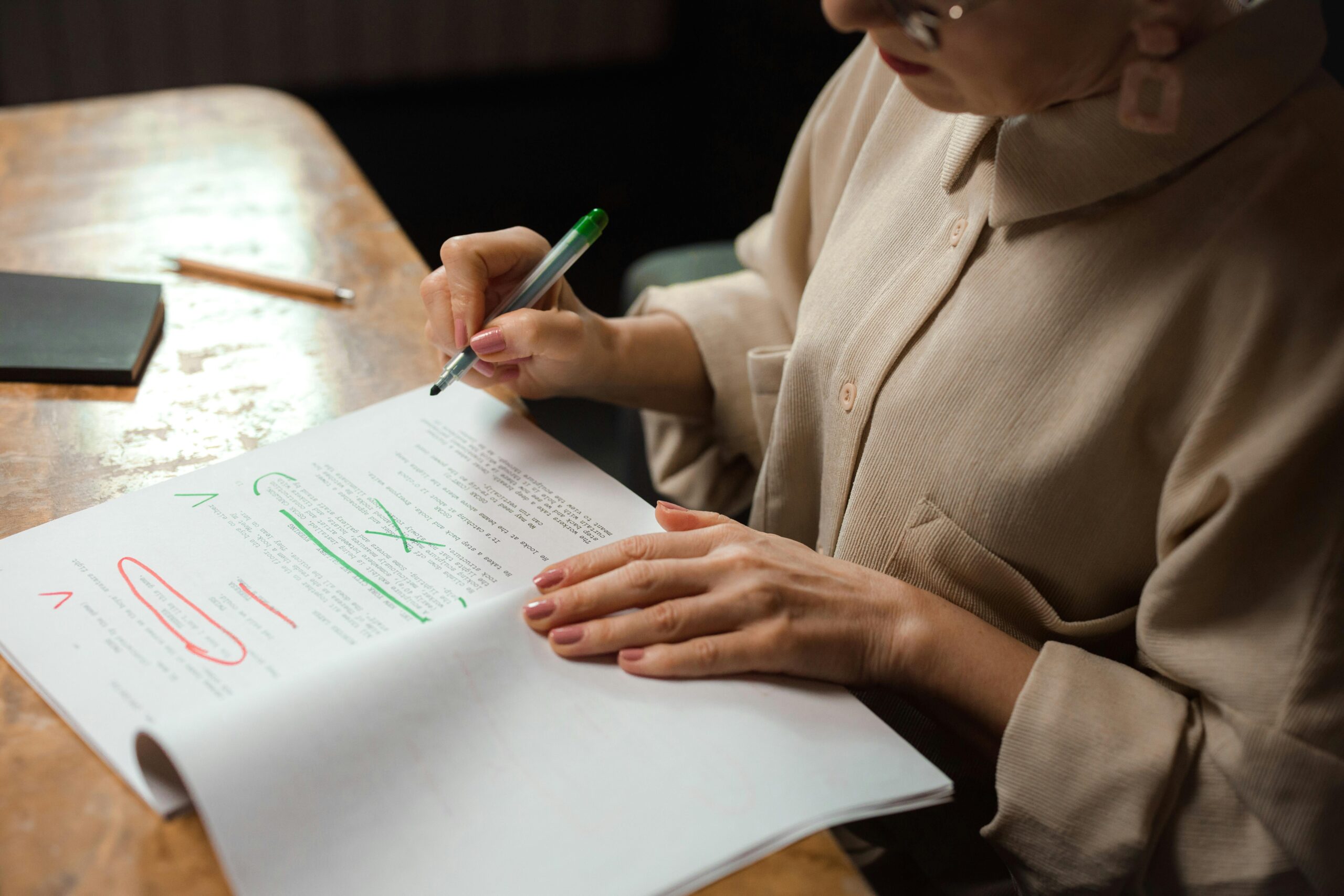
The Difference Between Copyediting and Proofreading
Countless times throughout your editing career, a client will ask you to “proofread” something. Then they’ll send you a Microsoft Word document full of grammatical errors, inconsistent capitalization, and heading styles that change from chapter to chapter. They don’t want proofreading; they want copyediting. And if you don’t know the difference between copyediting and proofreading, you’ll either do far more work than you were hired to do or deliver far less than the project actually needed.
This confusion isn’t entirely the client’s fault. The word “proofreading” has been stretched so far from its original meaning in the US that it now functions as a generic term for any kind of editing review—lighter than a full edit, heavier than a casual read. That’s not what it means in professional publishing, and it’s not what it means here at the Editing Institute. Understanding the actual distinction between these two services is one of the most practical things you can do as an editor.
What is copyediting?
Copyediting is the technical edit of a manuscript. The operative word is manuscript—a document in progress, typically a Word file, that hasn’t yet been designed, laid out, or typeset. By the time a manuscript reaches a copyeditor, the developmental and structural work is done. The writing is what it’s going to be. The copyeditor’s job is to make it correct and consistent before it moves into production.
That involves more than grammar, though grammar is certainly part of it. A copyeditor checks spelling, punctuation, capitalization, hyphenation, and number style throughout the document. She applies a style guide—most commonly the Chicago Manual of Style in book publishing—and any client- or publisher-specific style sheet. She flags factual inconsistencies, verifies that cross-references are accurate, ensures that terminology is used the same way in chapter one as in chapter twelve, and creates a custom style sheet documenting every decision she makes. She queries the author on anything she can’t resolve herself.
This happens in Word, using Track Changes. It’s thorough and time-consuming—a copyeditor at a medium level of copyedit may only get through five or six pages an hour on a dense nonfiction manuscript. The work requires genuine command of style: not just knowing the rules, but knowing when to apply them and when an apparent violation is an intentional authorial choice worth keeping.
What is proofreading?
Proofreading is not copyediting. It’s not a lighter version of copyediting, or a faster pass through the same document, or a final grammar check before you send something off. Proofreading is a production-stage task that operates on a specific type of document: a proof.
A proof is the typeset version of a manuscript—the document as it looks after a designer has laid it out, applied fonts and spacing, and produced what will become the final published artifact, typically a PDF. Proofreading happens after that process, not before it. The proofreader catches two categories of errors: those introduced during typesetting itself (a dropped line, a shifted font, a running head that repeated incorrectly, spacing that broke in an unexpected place) and serious errors that survived the copyedit.
A proofreader is not there to reconsider the grammar or restructure sentences. The copyeditor handled that. The proofreader’s job is to confirm that what the designer produced accurately reflects what the copyeditor approved, and that no new problems crept in during production. She is reviewing a formatted document, not editing a manuscript.
This is why professional proofreaders need to understand the conventions of page layout. They’re checking page breaks, running heads, widows and orphans, the alignment of elements, the consistency of spacing, and many other production concerns that require a trained eye for the physical document, not just the text.
Why are there different document types for copyediting and proofreading?
These two editorial services happen at different stages of production, and each stage produces a different kind of document.
The copyeditor works on a Word document—a live, editable file where nothing is set in stone. Every decision she makes can be tracked, accepted, or rejected. The text is fluid.
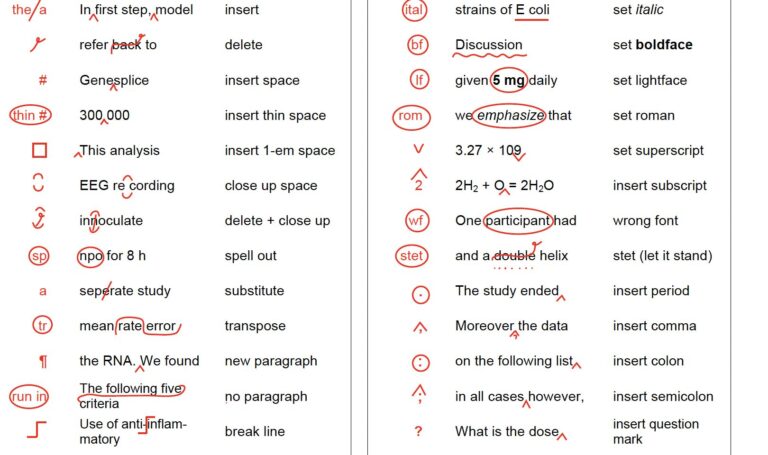
The proofreader works on a PDF—a rendered document where the text has been locked into a specific visual form. She may be working against the original edited manuscript to verify that the typesetter captured every correction accurately. Her marks refer to the physical document: this line break is awkward, this header is missing, this word running onto the next line creates a problem.
These are genuinely different levels of editing that require genuinely different skills. The fact that both involve close reading of text is about as informative as saying that a surgeon and a carpenter both use sharp tools!
Where do so many people confuse proofreading with copyediting?
Part of the problem is that “proofreading” has migrated out of publishing and into general use, carrying very little of its original meaning. When someone says they proofread their own email before sending it, they mean “read it over carefully.” This is fine for casual conversation, but it becomes a problem when clients use the same word to describe what they’re hiring a professional editor to do.
The other part is that many editing projects—particularly in corporate and digital contexts—skip the traditional production pipeline entirely. There’s no typesetter, no page proof, no designed PDF. There’s a Word document that goes more or less directly from the author to the reader. In that context, the line between copyediting and proofreading genuinely blurs, because the production stage that gives proofreading its meaning doesn’t exist.
That’s a real feature of contemporary editing work, and it’s worth knowing. But it doesn’t make the terms interchangeable. It means you need to understand what a client actually needs—and have the vocabulary to ask the right questions.
What does this mean for professional editors?
When a client asks for proofreading, your first job as an editor is to find out exactly what they mean. Do they have a Word document that hasn’t been edited yet? That’s a copyediting project. Is it a designed PDF ready for print or publication? That’s an actual proofreading project.
Is it something in between? Say, maybe a Word document that’s been through editing and just needs a final pass? That might be a light copyedit or final review.
Knowing the difference lets you scope the project correctly, price it accurately, and set appropriate expectations. It also lets you push back, professionally and clearly, when someone asks you to proofread a manuscript that has never been touched by an editor. That’s not proofreading. It’s a different service, it takes longer, and it costs more.
This terminology exists for a reason. Using it correctly is how you protect your time, serve your clients well, and present yourself as an editor who actually knows the field.
For a broader look at how copyediting and proofreading fit into the full editorial process, check out our post on the four levels of editing.

2 Comments